
There is, between Rao's tenure as PM and the current Modi regime, a powerful resonance of how transition can be managed. Rao's tenure saw many scams -- one where he was supposedly approached by Harshad Mehta with a bribe for making the securities scam go away. The Opposition insisted on a JPC. Despite knowing a JPC report would undermine him politically, Rao agreed to one, saying he had 'nothing to hide'.
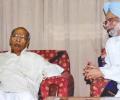
'Narasimha Rao asked me why China was doing so well in attracting foreign investments and I gave my frank opinion.' 'I told him that giving thrust to exports had to be a national effort.' 'But in India, the system was very centralised in the Government of India and the state governments had no role to play.'
Congress leader Jairam Ramesh interacts with readers on Rediff Chat as he discusses the period that changed India's history, forever.

'People don't like leaders who just crib and complain without offering a clear objective.' 'Theoretically and pragmatically, Rahul has to show an agenda beyond bad-mouthing Mr Modi on economic policies, foreign policy...'

India still has to go a long way to implement reforms in various sectors.

'At the end of the day, it is just another technology produced by the human mind.'

'We were in a heavily nuclearised environment. China had tested for Pakistan in the 1980s and helped their missile programme stay just one step behind us.'

'She was not a yes person. She would tell the truth and her feelings to Indira Gandhi, and Indira Gandhi would value her opinion. The same was the case with Rajiv Gandhi who would value her opinion.'

'He depended too much on assurances given by sadhus and sants. He may not be culpable, but he was wholly responsible for December 6, 1992.' 'While Manmohan Singh came to reforms out of conviction, Rao came to reforms out of compulsion. If the compulsion had not been there, I don't know how he would have responded.'

'Judges have transmitted a terrible message to citizens across the nation. All right-thinking individuals will be disturbed by what the Delhi high court judges have done.'

'The Congress submitted four names to the government as the people who should accompany the delegation.' 'I don't know what happened to those names.' 'When I was approached, I told them to speak to my party.' 'I have no further involvement with this delegation.'

'Shibu Soren was the tallest leader of tribals in the country.'

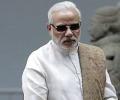
'The BJP's numbers in this government are almost the same as those enjoyed by the Congress under P V Narasimha Rao when the reform process was kicked off in 1991.' 'As before, the only constraints on the prime minister's actions are internal, not external.' 'They come from his own assessment of the political consequences of any action,' points out Mihir S Sharma.
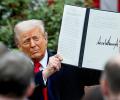
India needs another shot of difficult reform, of the kind only possible at gunpoint. Mr Trump holds that gun to our heads now. A drastic reduction in tariff protection, other elements of sarkari wet-nursing will force entrepreneurial India to become competitive again, argues Shekhar Gupta.

Morarji Desai was 81 when he was elected prime minister and ruled India for two years, from March 1977 to July 1999.
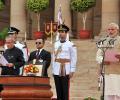
'His record will be clouded by the same negative factors as of Rajiv Gandhi and Narasimha Rao, namely, their politics and therefore social policies,' says T C A Srinivasa-Raghavan.

Many were hoping that with Vajpayee's NDA gone, there would be a return to the Congress normal. Nobody was prepared for the opposite. Sonia Gandhi was sceptical. This became the only issue over which Manmohan Singh took on his party bosses and risked his government. Politically, it was riskier than the 1991 reform, recalls Shekhar Gupta.

If the government of the day would like to set in place a smooth and well-planned changeover and facilitate the incoming chief to chalk out his action plan well in advance, the announcement of a successor needs to be done early, observes Colonel K Thammayya Udupa (retd).
He was colourful. He was dramatic. He was The Master of His Craft. There never will be an editor as versatile as Pritish Nandy, notes Nikhil Lakshman.
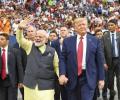
No single individual, institution, or action is to blame for this. The BJP is responding in kind -- definitely not without checking with its government. And they wait for Mr Trump, notes Shekhar Gupta.

Perhaps because the Modi government had some differences of opinion with two of the economist governors (one of whom was appointed by the Manmohan Singh government), there is a view that its political leadership prefers a civil servant to head the RBI, notes A K Bhattacharya.

India needs administrative reforms that make it easy for investors to do business in the country. Currently, it is more difficult to do business in India than in Rwanda, Pakistan, Nepal, Kenya, Nigeria and Bangladesh.
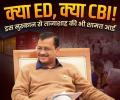
'One is happy. The moment one starts criticising the BJP, ED, IT and CBI comes to one's house.'

The climate for 'doing business' remains forbidding, taxtortion is still rife, corruption at state and district levels has increased, oil prices remain extortive with high taxation, and the continued red tape has kept the enterprise system as stifled as before, points out Debashis Basu.
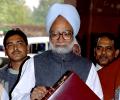
'We are going to need more technical people in government.' 'You can't expect a generalist to understand the complicated world of financial engineering.' 'I regret to say that most of our politicians have no competence to deal with these things. Nor is there a willingness to learn.'

'Even the President does not have the power to overrule the ECI.'

'It is not his doing, but Rahul Gandhi is forced by circumstances.' 'In taking political decisions, everything has to get his clearance.'
No confidence motions have been moved in the Lok Sabha 27 times in the past, and all of them have either been defeated or remained inconclusive, data compiled by a think tank shows.
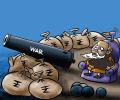
That's why he is now finally focusing on the two things that alone can help: Fiscal expansion -- from December onwards -- and supply management via amended laws and rules that affect business, notes T C A Srinivasa-Raghavan

No government in the past initiated the process of policy making for its next tenure even before going in for elections. Once the Model Code of Conduct is enforced by the Election Commission, should the government of the day refrain from taking an active interest in policy making for the next five years and let that be the function of the new government?, asks A K Bhattacharya.

Wouldn't it be better to join the celebrations with the vast Hindu majority while at the same time criticising Mr Modi/BJP/RSS for politicising it? notes Shekhar Gupta.

'In 1984, Pyongyang just had one hotel and one could not move out without an official escort.' 'India was the only country with an embassy, apart from the socialist countries.'

Teen Murti Bhavan served as the official residence of India's first prime minister Jawaharlal Nehru.

If Indira Gandhi hadn't targeted the RSS, Narendra Modi wouldn't be sitting pretty with his second majority and looking at a third, asserts Shekhar Gupta.
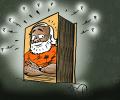
For a PM who hasn't completed even one term yet, the ability to spark a publishing trend single-handed is a remarkable achievement, writes Kanika Datta.

Say hello to the cast of The Accidental Prime Minister.

'All the things that went into bringing Yakub Memon back to India between 1993 and 1994 must be recorded in that file. Raman would have submitted his findings to the prime minister on file; in writing.'

'If on the back of the resentment against the Modi government, on the very outside chance that the Congress emerges as the single largest party in May 2019, will Rahul Gandhi become prime minister?' 'Or will he do a Sonia and appoint someone else?' asks T C A Srinivasa-Raghavan.

The two main factions in Karnataka's Congress party -- one led by Siddaramaiah and the other by D K Shivakumar -- are both contenders for the chief ministership. Both groups have fought hard to get their choice of MLAs the party ticket, notes Aditi Phadnis.
